The steadier container for a difficult question
How independent publishers can recognize problems worth books by looking for reader confusion, decision pressure, scattered advice, and the need for structure.
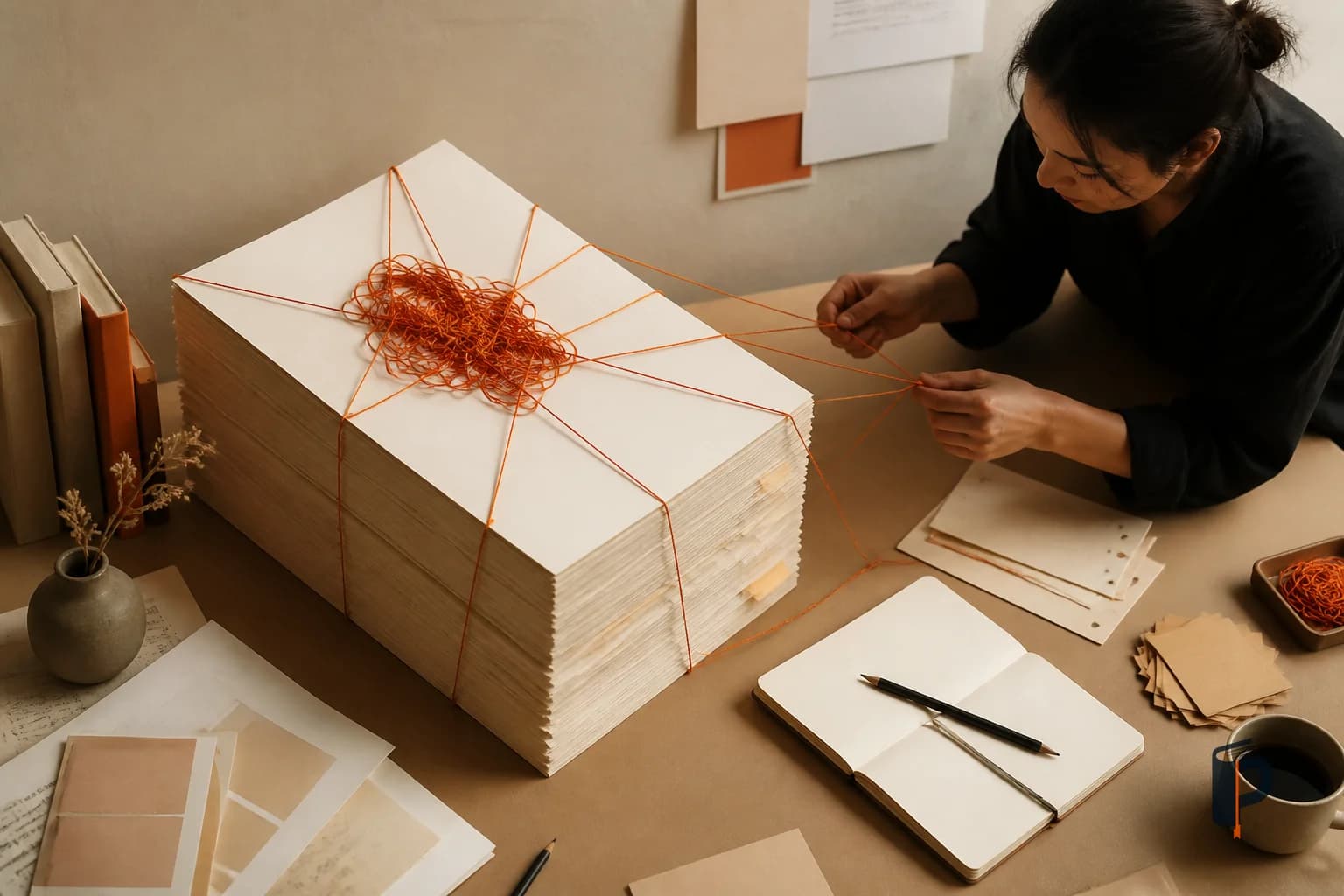
Some questions are not difficult because they are obscure. They are difficult because they sit in the middle of a life, a project, a practice, or a decision where the reader cannot afford to keep guessing.
A quick answer can point in a direction. A good article can name the issue. But sometimes the reader needs something steadier: a place where the question is held long enough for the pattern to appear.
That is one way to recognize a problem worth a book.
Where the weight first appears
A book-worthy problem usually has weight before it has length.
It returns in different forms. It appears in search results, conversations, notes, bookmarks, abandoned drafts, half-finished plans, and repeated decisions. The reader is not only looking for information. They are trying to make sense of competing signals.
This is why the size of the answer should not be chosen first. The more useful question is whether the problem has enough internal movement to require a sequence. Does one idea depend on another? Does the reader need context before judgment? Are there tradeoffs that only become visible after the obvious advice is removed?
Piko has written before about when a problem is worth a book. The deeper pattern is this: a book earns its place when it can carry the reader from scattered awareness toward a more usable understanding.
The reader arrives with fragments
Most practical readers do not arrive empty-handed. They arrive over-supplied.
They have read three confident opinions. They have saved a checklist. They have heard a warning from someone with experience. They may already know the vocabulary of the subject, but not the order in which the vocabulary matters.
This is where scattered advice begins to fail. It gives the reader pieces without showing the joints. It offers certainty without showing conditions. It answers the visible question while leaving the underlying decision untouched.
A focused edition has a different job. It does not need to make the reader feel flooded with expertise. It needs to help them see what belongs together, what can be ignored, what must be decided, and what should be watched over time.
The book becomes useful because it respects the reader's confusion without exploiting it.
What the edition must hold
A steadier container is not simply a longer container.
A focused nonfiction book should hold a clear problem boundary, a sequence of ideas, the necessary background, practical examples, and a way for the reader to test the material against their own situation. It should also show its editorial choices. What is inside the edition? What has been left outside? Where does the reader need a framework, and where do they need a checklist?
Companion tools can help here, but only when they support the book rather than replace it. A worksheet is useful when it helps the reader apply a chapter. A checklist is useful when it reduces the risk of forgetting a necessary step. Field notes are useful when they show how the idea behaves outside the clean lines of explanation.
The tool should never become a shortcut around understanding. It should make the understanding easier to use.
This is also why book length should follow the problem, not the other way around. A small problem can become swollen by over-explanation. A complex problem can be made brittle by compression. The work is to find the natural scale, as in a book sized to the problem.
The noise that looks like usefulness
One of the easiest mistakes in independent publishing is mistaking accumulation for clarity.
A pile of examples can look generous. A long list of sources can look serious. A broad table of contents can look complete. But the reader does not need evidence of effort. They need evidence of judgment.
A few kinds of noise are especially easy to invite into a practical edition:
- The urge to cover every related topic because the research is available.
- The temptation to answer every objection before the main thread is stable.
- The habit of adding frameworks before the reader understands the decision.
- The pressure to sound comprehensive instead of being usefully bounded.
- The mistake of treating contradiction as a flaw instead of a signal that context matters.
A good editorial process removes as carefully as it adds. It asks whether each chapter helps the reader move, decide, compare, notice, or practice. If it does not, it may belong in the research file rather than the book.
Questions before an edition exists
Before a problem becomes an edition, it helps to sit with a few slower questions.
What does the reader keep trying to decide?
Where do quick answers leave them exposed?
Which parts of the problem are noisy because the subject is complex, and which parts are noisy because the available advice is poorly organized?
What does the reader need to understand before a checklist would be useful?
What examples would make the problem more honest?
Where does the book need to slow down?
Where should it refuse to wander?
These questions are not decoration. They are part of the editorial standard. They help turn a promising subject into a workable guide.
A quieter checklist
A problem may deserve book-length treatment when:
- The reader has more information than clarity.
- The advice changes depending on context.
- The decision has consequences beyond the first step.
- The problem keeps reopening after quick answers are applied.
- The material needs sequence rather than a single explanation.
- Practical examples would change how the reader understands the subject.
- A framework could reduce confusion without flattening the problem.
- Companion tools would help the reader apply the book, not avoid it.
Not every strong question needs a book. Some deserve an article, a note, a conversation, or a simple reference page. But when the reader needs orientation, structure, and a path through competing signals, a book may be the more respectful form.
From the publisher
At Piko Thread Editions, we are interested in problems that can withstand careful attention.
That does not mean every edition must be large. It means the book has to earn its reason to exist. The thread should be visible. The structure should help. The examples should be chosen with care. The reader should leave with a clearer way to think, not simply a larger folder of information.
A difficult question deserves a form that can hold it without rushing it.
That is the quiet promise of a focused edition: not to make the problem disappear, but to make it more legible, more ordered, and more usable for the reader standing in front of a real decision.
To follow the catalog as new threads are shaped into focused editions, visit Piko Thread Editions.
Publisher note
Piko Thread Editions starts with the problem, not the format. The goal is not to make more books. The goal is to follow a question carefully enough that the finished edition gives the reader structure, clarity, and useful next steps.